Venue and rooms
Research considers meeting pattern, room inventory, guest movement, load-in, food service, accessibility, and the desired off-agenda setting.
Hawaii Conference Planning
A Hawaii conference succeeds across two stages: the formal program and everything guests experience around it. We coordinate venue, production, movement, and hosted moments so those stages work as one.
Founder-led planning based in Honolulu, Hawaiʻi.
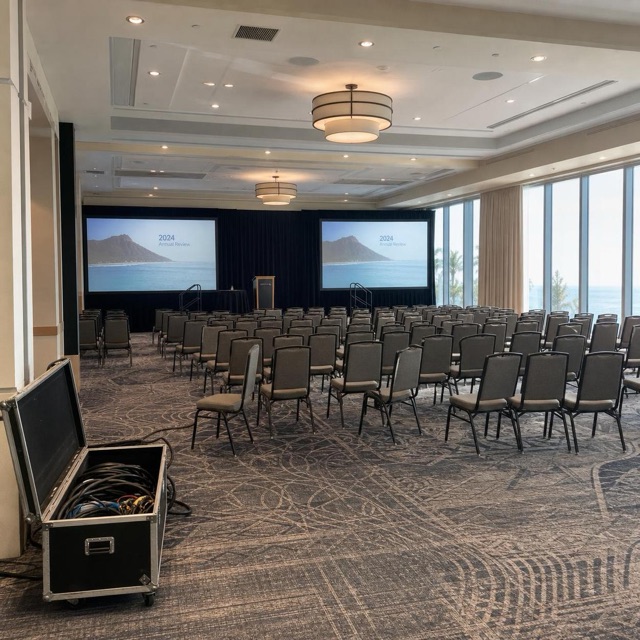
Two Programs in One
Hawaii conference planning is not only a question of ballroom capacity and screen size. Attendees may cross an ocean, arrive through several flight waves, move between a hotel and meeting venue, and decide whether the destination feels integrated with the event or merely visible through a window.
We begin by mapping the formal program, guest movement, and hospitality requirements together. Registration timing affects airport arrivals. Breakout transitions affect food service. Production load-in affects venue access. A closing dinner affects transport, attire communication, and the next morning’s departure pattern. Treating those as separate workstreams creates friction that guests feel even when they cannot name it.
Oʻahu offers the broadest conference infrastructure in the islands, including the Hawaiʻi Convention Center and a range of Waikīkī, Honolulu, and Ko Olina meeting venues. Maui, Kauaʻi, and Hawaiʻi Island (Big Island) may suit resort-based gatherings whose program and guest count fit the selected property. We assess the island and venue against the real agenda before developing the event environment around them.
JJ Signature can coordinate the agreed conference scope with venues, AV and staging partners, speakers, transport providers, hospitality teams, local operators, and cultural practitioners where appropriate. We do not present a fixed conference package or claim every discipline is performed in-house.
Explore Hawaii venue planning →Connected Workstreams
A single planning view helps venue operations, production partners, speakers, guest services, and evening-event teams work toward the same rhythm.
Research considers meeting pattern, room inventory, guest movement, load-in, food service, accessibility, and the desired off-agenda setting.
AV, staging, scenic elements, lighting, power, rehearsal, and show flow are coordinated with qualified production partners.
Speaker arrivals, rehearsals, presentations, green-room needs, and session transitions are mapped into the operating plan.
Arrival waves, registration, wayfinding, breaks, transport, access needs, and departures are viewed through the guest’s path.
Welcome receptions and closing events can carry the destination more fully while remaining connected to the conference schedule.
When cultural programming is relevant, local practitioners lead their knowledge and practice within an appropriately prepared setting.
Planning Sequence
The sequence keeps visual ideas and optional events from outrunning venue realities, production needs, or attendee movement.
Define the agenda, attendees, space pattern, approval path, and travel assumptions.
Compare island and venue options against the actual operating requirements.
Bring production, speakers, food service, transport, registration, and evening plans into one timeline.
Confirm owners, cues, communication paths, rehearsals, alternatives, and day-of authority.
What a Useful Brief Contains
The first planning conversation is more productive when it includes the pressures as well as the aspirations. A rough agenda and honest constraints are more useful than a finished mood board.
Extend the Program
The conference can connect naturally to recognition, leadership, or team objectives without crowding the main agenda.
We can evaluate resort-based conference programs on Maui, Kauaʻi, and Hawaiʻi Island (Big Island). Venue inventory, airlift, production needs, attendee count, and agenda determine whether another island is a practical fit.
Technical production is coordinated with qualified AV, staging, lighting, and related partners selected for the scope. Responsibilities and contracting structure should be defined clearly in the planning agreement.
Speaker logistics, presentation deadlines, green-room needs, technical checks, and rehearsals can be included in the agreed scope and integrated with the production schedule.
Registration needs can be coordinated with the client’s existing platform or a selected provider. The first step is defining who owns data, payment if any, support, badge production, check-in, and reporting.
Yes. We can connect those events to the conference identity, transport plan, guest attire, food service, entertainment, and the practical timing on either side of the agenda.
Share the working dates, attendance range, agenda outline, preferred island, departure markets, production expectations, hotel or venue conversations already underway, budget context, and decision timeline.
One Operating View
Send the conference brief, even if it is still changing. We will identify the decisions that need to come next.
Begin Your Journey