When your name is the one attached to the retreat, “it went fine” is not a real outcome. Leadership remembers whether the week felt considered or whether it felt assembled the week before. Most of what separates the two has nothing to do with the venue’s brochure and everything to do with decisions made months earlier: which weekend you chose, how you moved forty executives across the island, and whether the cultural moment on day two felt like a genuine welcome or a show. Here is what we have learned actually matters, in the order it usually gets decided.
The Venue Window Closes Earlier Than You Think
The Oʻahu venues that photograph well and run smoothly, the private estates, the working ranches, the handful of resort lawns with real shade and real ocean, hold a limited number of dates each year, and the good ones go first. If your retreat needs a specific month, plan to lock the venue and date nine to twelve months out. Anything inside six months narrows your options to whatever is left, not whatever is best. This matters more for corporate groups than weddings, oddly: a couple can shift their date by a season. An executive team usually cannot move around a board calendar or a fiscal year.
Read the Weather Calendar, Not the Postcard
Oʻahu’s dry season runs roughly May through October, and that is when outdoor programming behaves the most predictably. November through March brings a wetter pattern: shorter, heavier afternoon showers that can move a plated dinner indoors with twenty minutes’ notice. We do not treat that as a reason to avoid the winter months. Many companies prefer the lower rates and lighter tourist crowds. But every winter retreat we run has a covered contingency built into the program from day one, not improvised the morning of. The detail that surprises most planning teams: the best window for an outdoor lanai dinner is a narrow one, roughly five to six thirty in the evening most of the year, after the heat breaks and before the light goes flat.
The Honolulu to North Shore Drive Is Real
A retreat based on the North Shore, and there are good reasons to choose it, sits forty five minutes to over an hour from Honolulu International, depending on the hour and whether you are moving during the afternoon commute. Kamehameha Highway narrows to two lanes for long stretches, and there is no faster back route once traffic sets in. For a group of twenty or more, we do not put executives in individual rental cars for this leg. We charter shuttles, and we build arrival and departure windows around the highway’s known slow hours rather than the ones that feel convenient on paper. The retreats that run late almost always trace back to one bus that left twenty minutes behind schedule.
Cultural Programming, Done as a Welcome, Not a Show
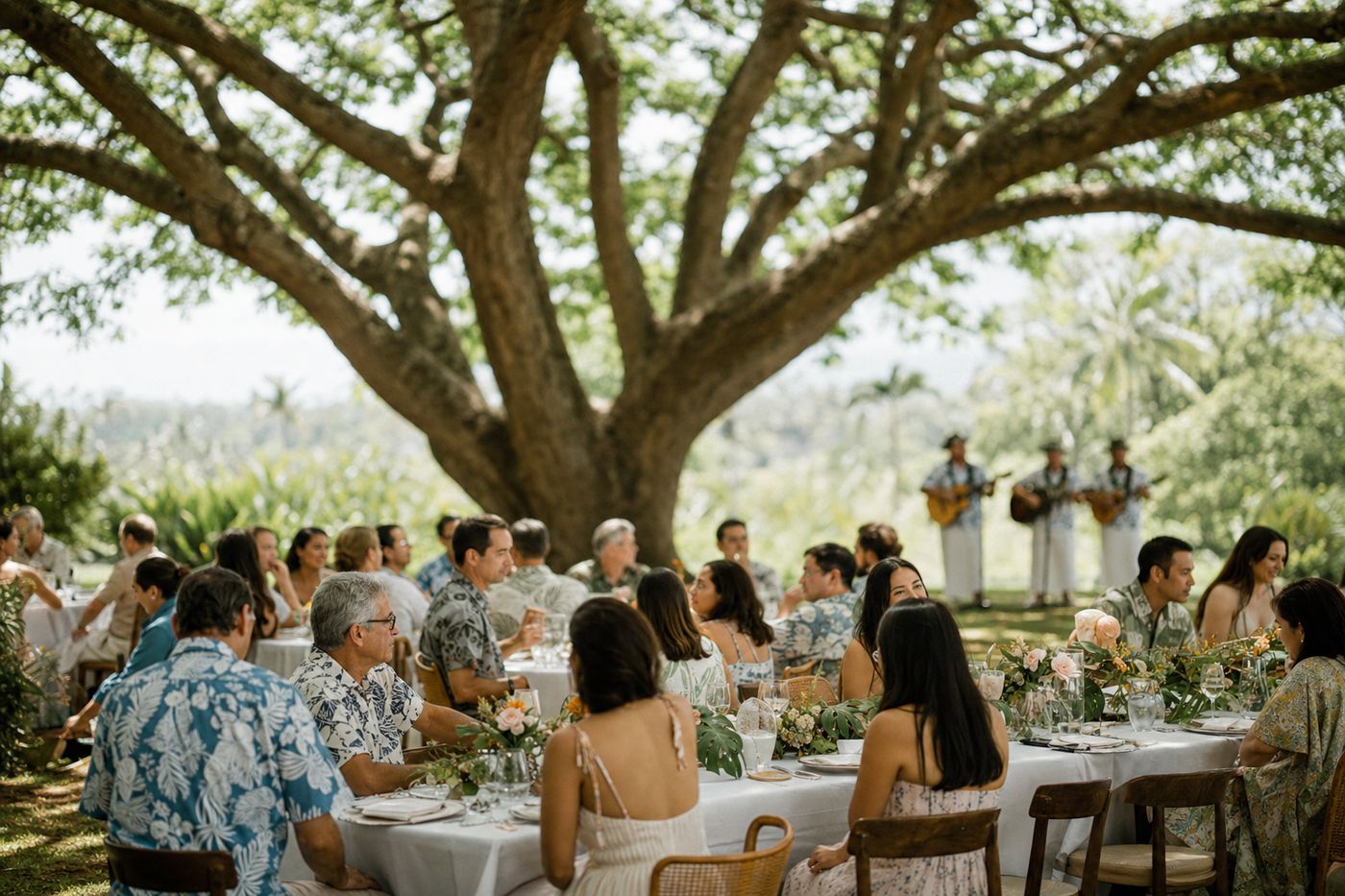
A blessing to open a gathering, a lei greeting, or live music can be a genuine part of a corporate retreat in Hawaiʻi, or it can read as a costume put on for out-of-state guests. The difference rests in who leads it, how they are invited, and whether the moment has a real place in the program. An appropriate local cultural practitioner decides what they are willing to share and provides the context for it. We coordinate the hospitality and production around their guidance rather than treating the practice as another decorative line item.
Planning a Retreat
This is the version of corporate events we produce most often, and it is the one we would love to talk through with you.
Explore retreat planning →